Thursday, February 13, 2014

REPOST: 6 Filmmaking Tips From Sarah Polley

Canadian actress and film director Sarah Polley shares some insights on filmmaking which she hopes could help those who want to master the craft.

http://filmschoolrejects.com/features/6-filmmaking-tips-from-sarah-polley.php
Image Source: filmschoolrejects.com

Even if you don’t buy into the game and you prefer not to live in a world in which the term “Oscar snub” is used with a straight face, sometimes a lack of recognition for worthy nominees can still sting a little. Such was the case with the conspicuous absence of Sarah Polley’s name when the Best Documentary Feature nominees were announced two weeks ago. After two strong narrative explorations of romantic relationships in the bitter winter of old age and the summer splendor of late youth (Away From Her and Take This Waltz, respectively), Polley redirected her interest in the world of human coupling by turning the camera on herself – or, more accurately, her family, or, even more accurately, who she thinks may be her family, or… Well, just see it if you haven’t already, because Stories We Tell is one of the more passionate, involving, and incisively intelligent mainstream documentaries to be released in quite some time.

AMPAS has had a history of recognizing more conservative, journalistic notions of “documentary” and shown favor for the crowd-pleasers (like this year’s Sugar Man-esque hit 20 Feet From Stardom). But that only speaks more in Polley’s film’s favor, as it potentially joins the ranks of other productively unconventional yet contemporaneously unrecognized documentaries that we continue to regard as seminal well after their release, like Errol Morris’ The Thin Blue Line.
Regardless of the reputation and recognitions of Stories We Tell, now or in the future, Sarah Polley is certainly a filmmaker whose consistently interesting output via only three feature titles behind the camera makes her one to follow. So here’s a bit of free film school (for fans and filmmakers alike) from a director who convinced us to treat Seth Rogen seriously as an actor.

Be an Actor, Filmmaker. Not an Actor/Filmmaker

I like the feeling of keeping them separate. I find that really gratifying. I can’t imagine combining those. For me, I love the feeling of using different parts of my brain separately.”
Everyone from Charlie Chaplin to Zach Braff has shown a love for the whole off-screen/onscreen thing, but Polley (who has been acting professionally since age 8 and was touted throughout childhood as a national treasure by the Canadian press) has preferred to keep her acting and directing duties separate.
Polley’s extensive acting experience no doubt informs and enriches her directing skills – notably her masterful handling of gifted actresses like Julie Christie and Michelle Williams – but her self-designation as a director strictly sitting behind the camera (with the qualified exception of the intensely personal Stories We Tell, a film that is in multiple ways pointedly about her role behind the camera) contributes to her ability to construct a rich experience for her audience. She sees what we ultimately see. And there’s also something admirable and classically anti-fourth-wall-breaking about a filmmaker and consummate performer who makes such intimate work that she’s not on the screen for.

Limitations Are Opportunities


In this 2006 interview on the Canadian Broadcast Channel, Polley attests in detail to the ways in which the economic limitations of Canadian filmmaking have allowed her to realize the films she wants to make with notable creative freedom – “freedom” not referring to the endless resources available to studio films, but the ability to realize the film one seeks to craft to completion. In the years since this interview, Polley has been openly critical and skeptical of the Canadian film industry’s recent emphasis on more commercial fare, which pains the star who still calls Canada home and who mines her life in the great northern neighbor for the stories she tells.
But whatever changes may portend the Canadian film industry, at least Polley began her career knowing what can come of a strict standard for creative freedom, which will no doubt embolden her continued seeking of that standard in her future work.


Draw Your Boundaries and Stick to Them

In December 2009, I made a film to be aired during the Academy Awards that I believed was to promote the Heart and Stroke Foundation. When I agreed to make this film [The Heart], I was thrilled, as I was proud to be associated with the work of this incredible organization. However, I have since learned that my film is also being used to promote a product. Regretfully, I am forced to remove my name from the film and disassociate myself from it. I have never actively promoted any corporate brand, and cannot do so now.”
Polley has been well known in her home country for her political activism, and she used her childhood renown as a platform for expressing political consciousness and publicly addressing underacknowledged issues. While Polley’s activism has drawn less media attention during her adulthood, she maintains her political convictions in her work and in her life.
The above quote comes from Polley’s decision not to collaborate on a charitable film that turned out to carry pointed yet shrouded commercial motives. As North American filmmaking itself requires some significant capital in order to even complete a film, and as the public functions of the Canadian film industry seem to be showing a decreasing interest in serious work by Canadian filmmakers in favor of commercial competition with Hollywood, Polley must understand that her desire to continue producing adult dramas (a genre virtually unknown to today’s multiplexes) could easily be co-opted with private interests that do not align with her own. In media industries, it’s no doubt tempting to become a corporate tool in order to either pursue your dreams or even contribute to something charitable; so it’s better to know and be convicted in your boundaries well in advance.


Know What Your Lines Are and Don’t Cross Them 


This may sound on its face like a piece of advice identical to the one explained above, but this received wisdom (as the 2012 Studio Q interview above shows) is articulated in regards to Polley’s personal life. Polley was a movie and television star before she was a filmmaker, so even when she doesn’t appear on camera in her own films, she is often received as the “star” of these films. With Stories We Tell, she’s put something out in the world that was deeply personal, pointedly introspective, and nakedly transparent. For fans and journalists, the temptation is greater with Polley than perhaps other filmmakers to read Polley’s films through Polley’s own public identity. So she offers these words in order to allow her film to speak for itself rather than permit her public image outside of the film to overwhelm it.

Understand the Human Function of Storytelling

“I was more concerned the film should include everybody’s version and not be one-dimensional . . . Telling stories is our way of coping, a way of creating shape out of a mess. It binds everyone together.”
In a medium prone to narrative, whether you’re making fiction or non-fiction films, “truth” can be a sticky and ultimately irrelevant concept.


Know Relationships, in Work and in Life

“[Away From Her features] the opposite kind of love than we usually celebrate in films, which is new love without knowledge and without hardship. It’s the whole idea of love after life has had its way with you, and after you have kind of failed each other and things have gone off the rails. Yet love still somehow exists between them.”
Polley has been open about her own personal relationships – not as a subject of celebrity gossip, but as an account of personal experiences she’s had while making her films. From the get-go with Away From Her, the 35-year-old Polley has shown a remarkable insight into the complicated shifts that relationships endure. The “infidelities” portrayed in Away From Her and Take This Waltz don’t have a good guy or a bad guy, and are far more complicated than any narrative framing through rule-breaking and forgiveness would allow.
Stories We Tell shows how time allows us to rethink our relationships, explores the ways in which we do and don’t share subjectivities, and exhibits the means by which we map our present experiences onto the past. It’s difficult to imagine that someone would be so insightful on the subject of the emotional life of others if she didn’t have a thorough understanding of her own.


Final Thoughts


It’s difficult to say how applicable any of the above advice is to aspiring filmmakers, as not many people live lives that resemble Sarah Polley’s. This is only a practical guidebook if you’re a child star who grew up in a country with a state-run film industry. But what’s unique about Polley’s work (in method and outcome) is how unconcerned with the practical it is. She isn’t preoccupied with the utilitarian logics of most film industries – e.g., relaying her fame into creative or monetary capital, paying attention to what types of films draw audiences, branding herself as a filmmaker or performer.
Instead, Polley’s films investigate the emotional lives of humans, take seriously the underexplored possibilities of adult drama, and use memory as a palette with which to understand precisely how we understand our lives. Her films, to put it mildly, do not seek an audience, and in so doing prove that there’s always an audience hungry for surprising, insightful, and sincere filmmaking.


Samantha Pouls aims to become a successful filmmaker and writer in the future. For more articles about filmmaking, visit this Facebook page.

Thursday, January 16, 2014

REPOST: Oscar Nominations: Snubs And Surprises

Scott Mendelson of Forbes weighs in on the major surprises and shocking omissions from the roster of 2014 Academy Award nominees, including the elimination of viable African-American actors from major categories.


Image Source: forbes.com

For the complete list of nominations, go to Oscar.com.
There were a few surprises this morning as the 86th Academy Award nominations were announced, mostly negative ones I’d argue. In the major categories, the Best Supporting Actress category saw two not-entirely expected contenders, with Julia Roberts snagging a nod for the Weinstein Company’s August: Osage County (for what is clearly the leading role) and Sally Hawkins taking a nod for Sony's  Blue Jasmine. Sadly the biggest surprise this morning was the more-or-less complete shut-out of viable African-American nominees in the major acting categories, as well as the complete omission for the Weinstein Company’s The Butler. What was hoped to be a strong year for black-centric cinema frankly didn’t turn out that way.
It wasn’t just Julia Roberts and/or Sally Hawkins sneaking in past Oprah Winfrey. Forest Whitaker and Michael B. Jordan were presumed to have solid shots at a Best Actor nomination for The Butler and Fruitvale Station respectfully, with Idris Elba for Mandela: Long Walk To Freedom being a potential spoiler. But a late surge for Dallas Buyer’s Club as well as understandable affection for Bruce Dern’s turn in Alexander Payne’s Nebraska (Paramount) arguably cost them nominations. Mandelabecame a serious contender, especially when the mixed reviews popped in, and it is represented only for its U2-penned song Ordinary Love”. So what looked like a possible Best Actor field, if not an overall Oscar playing field, filled with black-centric films is now just a matter of Fox Searchlight’s 12 Years A Slave (10 nominations) representing what was actually a strong year for mainstream black-centric cinema.
The other major “snub”, aside from Tom Hanks not getting a Best Actor nod despite Captain Phillips getting a Best Picture nomination, is arguably the omission of the popular and buzz-worthy Blackfish in the Best Documentary category. The “Sea World is evil” documentary has been a major force in the media since July, so its omission is surprising. Less surprising is the near-complete absence of the Coen Bros.’ Inside Lleywn Davis (CBS Films), which will make due with a Best Sound Editing nomination (which it will probably lose to Gravity) and a Best Cinematography nod. And in terms of nominations that arguably didn’t deserve it, it’s no secret that I’m not a fan of Sony’s American Hustle (10 nominations, including yet another David O’Russell film scoring a nomination in all seven major categories) or The Dallas Buyer’s Club (7 nominations, including Best Picture), so I’ll merely say that almost all parties involved have done better work elsewhere and leave it at that for now. Matthew McConaughy has done a hell of a job tricking the media into thinking he used to be a terrible actor.
But let’s not entirely focus on the negative. Warner Bros.’ Gravity racked up ten nominations, including Best Picture, a slew of technical nods, and a Best Actress nomination for Sandra Bullock. While it has no chance of winning, Disney’s The Lone Ranger got a much-deserved nod in the Special Effects category, which is a win for those who champion high-quality practical effects work along with now-conventional CGI visuals. Lone Survivor received nods only in the sound categories, as well it should. In a somewhat surprising turn, Saving Mr. Banks got shut out save for its score, so thanks for nothing Ms. Streep (who got a Best Actress nod for her supporting turn in August: Osage County). 12 Years A Slave was represented with 10 nominations, including Lupita Nyong’o for Best Supporting Actress, even if she’ll probably lose to Jennifer Lawrence. And Spike Jonze’s Her got a Best Picture nod and a Screenplay nod, the latter of which it may win.
As with every year, it was a mixed bag of deserved nominations (Gravity12 Years A Slave for everything), unfair snubs (Stories We Tell for Best Documentary), and frankly undeserved nominations (Jared Leto in Dallas Buyer’s Club). But once again I must acknowledge the all nine of the Best Picture nominees were films that came out no earlier than October. The entire first nine months of cinema, much of it quite good, was completely ignored in favor of what amounts to predestined Oscar nominated films. The first nine months of the year are, outside of special effects and animated categories, basically represented by Woody Allen’s Blue Jasmine and Richard Linklater’s Before Midnight in their respective writing nods and Cate Blanchett and Sally Hawkins’ nods for Blue Jasmine.
There was absolutely no shot for earlier films like Short Term 12, 42, or yes, The Butler that earned strong reviews and had truly passionate followings. Right or wrong, they were all overlooked in favor of films explicitly intended to earn year-end awards acclaim, and further bolstered by an Oscar punditry that treated them as anointed contenders before they were even released.  Ironically, said representation actually happened for two years, 2009 and 2010, the two years we had that straight ten nominees for Best Picture rule, but “outrage” over films like The Blind Side getting in (horrors… a well-reviewed and audience-pleasing smash hit character drama!) led to the current system. We still get more than five nominees, but it merely means a few more slots for predetermined Oscar contenders.
If we want an Oscar race that actually includes the entire year in cinema, that is something that’s going to have to change. Anyway, I’ll talk a little more about this between now and the ceremony, with a Box Office Catch-Up: Oscar Edition in the next few days. Who do you think got snubbed or unfairly nominated? Which justifiable nomination made you happiest?

Samantha Pouls is an amateur filmmaker who dreams of joining the ranks of Oscar winning directors such as Ang Lee, Martin Scorsese, and Francis Ford Coppola. See this Facebook page for more interesting articles on movies and filmmaking.

Tuesday, December 10, 2013

REPOST: ‘Frozen’: A virtually flawless film

Frozen was released just in time for Thanksgiving to remind us how family and love are the things we should be thankful for the most. Hypable.com gives us the details.

Image source: hypable.com


All of the films in the princess subgenre of fairy tales have led to the masterpiece that is Disney’s Frozen.

Frozen is the tale of two sisters. Elsa (Idina Menzel) has the power of the titular character from Hans Christian Andersen’s The Snow Queen, the fairy tale the film is loosely based upon. Unlike the Snow Queen, Elsa has no control over her powers. While she does have the ability to do incredible things like create a snow storm upon command, she also can’t stop herself from sending ice flying in any direction. Anna (Kristen Bell), Elsa’s younger sister, is completely normal in every way. The two sisters have a perfect sister relationship and they are each other’s best friend. One day, Elsa loses control and almost kills Anna. In an attempt to never hurt anyone again, Elsa locks herself in her room, away from everyone.

When Elsa finally does come out, it’s only for one day: her coronation as Queen. Anna is excited. Not only does she get to see her sister for the first time in forever, but the castle is opened to the public, and she gets to interact with strangers, something that is clearly necessary for her very extroverted personality. While running around amongst the people she runs into Prince Hans (Santino Fontana) and their interaction is as awkward as it is perfect. As with any fairytale true love, they get engaged that very day. When asked for her blessing, Elsa denies them. This forces Anna to push her, to demand to know why Elsa won’t allow anyone around her. Elsa loses control when the pressure is applied, and when the people know of her uncontrollable power, she flees, leaving the kingdom in an eternal winter. Anna decides to go after her sister and leaves Prince Hans as temporary ruler. On her journey to find her sister, Anna meets up with Kristoff (Jonathan Groff), an ice salesman, and Olaf (Josh Gad), a snowman brought to life by Elsa.

Frozen works on essentially every level, but perhaps the times it’s at its best is when playing off of the very familiar tropes of the princess subgenre of fairy tales. In traditional tales, everything is black and white, but in Frozen almost everything is grey. The town is cursed by a powerful female, but Elsa isn’t an evil queen who did it with malicious intent. No, she’s just a young woman who can’t control her powers, and that makes for a far more interesting character. There are several more examples of turning traditional meanings on their head throughout the film. Figuring them out is one of the most enjoyable aspects of the film, so I won’t spoil you.

The quality of musicals always come down to the effectiveness of the soundtrack. Often, especially with stories as strong as this one that don’t require singing, they can be seen as a gamble. Luckily, Frozen not only succeeds with its soundtrack, but the songs are so grand that they give so much to the film. They are amazing, Broadway caliber songs. The film smartly cast actors with experience on Broadway in the lead roles. While Kristen Bell and Josh Gad aren’t known as well for their Broadway work as co-stars Idina Menzel and Jonathan Groff, they quickly prove that they have the chops. Menzel’s “Let it Go” will likely make a play for best original song at the Oscars, and Gad’s “In Summer,” a song about a snowman who wants summer to come more than anything, is downright hilarious.

The songs never get tiring. The pace between song and script is spot on, as is the pace of the script in general. The film doesn’t drags anywhere, but that’s only one quality the script from co-director Jennifer Lee (the first female director of a Disney animated feature film) boasts. As noted previously, the script plays on tropes marvelously, but it’s also incredibly funny as well as emotional. It goes from punching you right in the gut one minute to making that same gut explode with laughter the next. It’s brilliant.

Image source: hypable.com


The animation work is absolutely beautiful, and it’s interesting to see the lasting effect the purchase of Pixar is having on Disney. Pixar has generally been seen as the innovators, but in the past two years, it’d be tough to claim that a Pixar film is better than a Disney animation film. The work today is really impressive, and this is no exception. There’s enough going on in the background to warrant multiple viewings.

Image source: hypable.com

Frozen is definitely a film made for kids, and with that comes very strong messages. These messages work far better than most kids movies. Sometimes the messages sent can be iffy at best (see: Brave), but they do exactly what they need to do. What and who is good and bad is somewhat murky throughout the film, but by the end it’s very clear. Young girls and boys will have characters to look up to as there are both strong female and male characters.

This is by all means a great Disney animated film. It’s one of their best in recent years, that’s for sure. It’s also probably one of their best ever, and it wouldn’t be crazy to say it’s up there with the big ones like The Lion King. It’s that good.

It’s becoming too common in today’s day and age to use adjectives like “amazing,” “incredible,” and “awesome,” but this really is all of those things. I don’t know what a perfect movie is, but Frozen is damn close.

Samantha Pouls is interested in filmmaking and writing. She loves blockbuster films such as the Harry Potter series, The Hunger Games, and the Twilight saga, and aims to achieve success at the level of these franchises when she produces her own projects in the future. For more articles about movies and film making, read this blog.

Tuesday, November 5, 2013

REPOST: In ‘Blue Is the Warmest Color,’ a young woman comes of age

Have you watched the movie 'Blue Is The Warmest Color' yet? This Palme d'Or recipient at this year's Cannes Film Festival isn't just about emerging homosexuality, which has become a commonly explored theme in independent films nowadays. The movie stands out because of its large use of closeup shots to capture emotions from the actors. Read Ty Burr's brilliant review of the movie below.

Image Source: bostonglobe.com


“Blue Is the Warmest Color” is proof that the cinema’s greatest gift to us is the close-up. No other medium gets so physically near to human experience as it unfolds in time; no other technique teases us with revelations of intimacy and every so often delivers. In Abdellatif Kechiche’s three-hour epic about a young woman’s coming of age — the top prize-winner at last May’s Cannes Film Festival and a scandale ever since — the camera hardly ever seems to leave the face of Adèle (Adèle Exarchopoulos) as it moves from pouty adolescent sensuality through physical ecstasy to a slowly hardening distress. If the filmmaker could somehow push past the barrier of his heroine’s skin to capture her madly firing neurons, you feel he would.

If he had, though, “Blue Is the Warmest Color” would be a different movie, and maybe not the one Kechiche intended. The public brouhaha surrounding this film has to do with three lengthy and explicit sex scenes that fill out the second hour, between Adèle and her older art-student girlfriend Emma (Léa Seydoux), but the movie is more properly about our larger appetites — for love, connection, life fully and vibrantly lived — and how, at the end of the day, we still end up hungry.

When the movie opens, Adèle is a bookish teenager, ravenous to take a bite out of experience. “Blue Is the Warmest Color” hangs around her classrooms and schoolyard, observing the catty byplay of her friends, a relationship with an earnest older boy (Jérémie Laheurte) that tips into sex and then falters. Adèle wants something more: She wants Emma, the blue-haired mystery girl she spotted in a public park — a rapturous movie moment of lust at first sight — and can’t get out of her head.

These early scenes are extraordinarily sympathetic to the confusions of youth, with cinematographer Sofian El Fani hovering daringly close to Exarchopoulos’s naive beauty. At times, the camera is content just to watch the girl sleep, either hoping for a glimpse of her dreams or simply marveling at this accidental odalisque. The original French title of “Blue Is the Warmest Color” is “La Vie de Adèle” -- “The Life of Adèle” — and Exarchopoulos gives us Adèle’s life force, tentatively at first and then in big, greedy gulps. If the movie deserves to be remembered for anything, it’s for this performance, risky and raw in ways not easily quantified.

Adèle finally meets Emma when the younger girl unintentionally-on-purpose wanders into a gay bar; and their initial conversation, followed by the slow dance of courtship and first kisses, is remarkable for the way it conveys the hermetically sealed pleasures — the sounds, the sunlight — of new love. It’s with the sex scenes that “Blue Is the Warmest Color” develops static, not because they’re “shocking” (which they’re not, really) or overlong (which they are) but because they’re aestheticized. Kechiche films the scenes in long takes with medium closeups; the emphasis is on emotional and physical desire finding explosive release, rather than the mechanistic calisthenics of porn.

Still, this is a voyeur’s airbrushed view of two women making love, not quite far enough from the tastefully intertwined limbs and slow dissolves of an old David Hamilton movie on late-night Cinemax. It’s not messy enough, either with these characters’ specific personalities or the funk of real life.

Would this movie look, sound, be different if a woman had made it? If a gay woman had made it? The question is both irrelevant and not. (For what it’s worth, Julie Maroh, author of the original graphic novel, has diplomatically disparaged the film on similar grounds.) Kechiche wants to deliver a heightened experience, to flood our senses with Adèle’s, but his movie only goes so far, and whether that’s a failure of filmmaking, imagination, or gender is anyone’s guess.

The last hour of “Blue Is the Warmest Color” follows the heroine’s life during the years after she and Emma break up; Adèle becomes shellshocked and stalled, and so does the film. It’s as if the director had given up trying to get under her skin and contented himself with recording the character’s weepy, occasionally grotesque flailings. There’s not much tragedy to any of this (although Exarchopoulos is still very affecting) and not much point either.

The most unflattering read would be that Kechiche has already had his way with Adèle — narratively speaking, of course — and now wishes she’d just go home. A more sympathetic take would be that this talented filmmaker has retreated behind the screenplay’s maunderings about the eternal mystery of womanly desire, all of them voiced by men, none of them second-guessed by the female characters. If you don’t really understand women — or don’t even want to — it’s easier to just call them a mystery and let it go at that. For all the close-ups, that may be why “Blue Is the Warmest Color” never gets close enough.


Samantha Pouls is a junior high school student and an amateur filmmaker who explores different techniques in filmmaking to enhance her skills. For more discussions on movies and film productions, subscribe to this Facebook page.

Saturday, September 28, 2013

REPOST: Taylor Swift Cast in The Giver With Meryl Streep, Katie Holmes and Brenton Thwaites

It seems like Taylor Swift is patterning her acting career to the very successful one she has in the music industry. Not the type to sit on her laurels, Taylor has taken upon the challenge of co-starring with one of Hollywood's most seasoned and versatile actresses, the one and only Meryl Streep.  Usmagazine.com gives the scoop on the upcoming film adaptation of The Giver.
Taylor Swift has been cast in a supporting role in the new Weinstein Company film The Giver Credit: David Livingston/Getty

image source: UsMagazine.com
Making room on her mantle for an Oscar? Taylor Swift is heading back to the big screen once again -- this time in an intense new supporting role in the film adaptation of the young adult novel The Giver by Louis Lowry.

image source: wikipedia.com


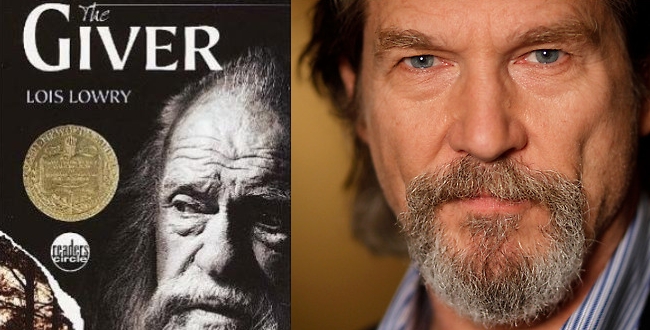
The singer -- who recently wrapped the last leg of her Red tour -- will be joining a slew of Hollywood A-listers on the new Weinstein Company film. Her costars include three-time Oscar-winner Meryl Streep, Jeff Bridges, Alexander Skarsgard, Katie Holmes, Brenton Thwaites, Odeya Rush and Cameron Monaghan.

image source: thefilmstage.com


"The Giver has always been a favorite book of mine and my kids," TWC Co-Chairman Harvey Weinstein said in a statement Friday. "We could not have assembled a more impressive cast for this project behind Lois Lowry’s beautiful novel and the directorial talents of Phil Noyce, and are tremendously excited to commence production."

As previously reported, Swift and her new costar Thwaites were briefly linked in September when they were spotted flirting at a private bash by Weinstein himself during the Toronto International Film Festival. But alas, the mingling appears to have been just a huge hint at the upcoming collaboration.
In fact, a source reveals to Us that Weinsten was overheard saying "See you in South Africa" to the two stars at the party. The cast of The Giver will soon be leaving to shoot in the country.

"Harvey Weinstein took Taylor to his table and sat her next to Brenton. They had a nice time talking but no numbers were exchanged," a Swift pal told Us Weekly exclusively at the time. "They are definitely not dating."
Swift's previous acting credits include a guest spot on CSI: Crime Scene Investigation, Valentine's Day, The Lorax and a guest appearance on the season finale of New Girl in Season 2.

Samantha Pouls is a high school student who loves films and the process of making them. See similar articles here

Wednesday, September 11, 2013

REPOST: Taylor Swift heads to Toronto Film Festival for ‘One Chance’ premiere

Taylor Swift walks the red carpet at the Toronto International Film Festival not as an actress but as the writer of the song featured on the end credits of the movie One Chance. Read what she has to say about the experience in an article posted on The Inquisitr.


Image Source: cdn.inquisitr.com
Taylor Swift won’t be showing off her acting skills at the Toronto International Film Festival this year but she will be walking the red carpet. The country singer is heading to TIFF tonight for the premiere of the movie One Chance.

Swift isn’t acting in One Chance but she did write a song for the movie. Her new song “Sweeter Than Fiction” will make its debut tonight during the movie’s ending credits.

Swift writes on Twitter: “Tonight= my first Toronto Film Festival experience-Going to the premiere tonight of One Chance, honored to have written the end credit song!”

One Chance was inspired by Port Talbot tenor Paul Potts. The movie tells the story of Potts’ rise to fame and stars James Corden, Alexandra Roach and Valeria Bilello. The movie was directed by David Frankel.

The Star reports that Taylor Swift may perform her song tonight for the audience. Rumors have been circulating that Swift will hold a small concert at the Toronto International Film Festival tonight but organizers said that there is “no indication” that she is planning to sing at the Winter Garden Theater.

“Sweeter Than Fiction” isn’t the only new Taylor Swift song that fans are excited to hear. The country singer is also reportedly working on new music with Jennifer Lopez.

Tonight= my first Toronto Film Festival experience-Going to the premiere tonight of One Chance, honored to have written the end credit song! — Taylor Swift (@taylorswift13) September 9, 2013

A writer herself, junior high school student Samantha Pouls draws inspiration from singer-songwriter Taylor Swift, among other artists. Get the latest updates about young Hollywood by following this Twitter page.

Friday, August 9, 2013

The insatiable James Franco

Image Source: telegraph.co.uk

There could be more than one apt title for this write-up—The many endeavors of James Franco, James Franco: The lover of life and art, and so on—but all these could be summed up to an adjective: insatiable.


With all the handsomeness the Great Providence has given to him, seeing him dabbling in different art forms is enough to make hundreds of vain men jealous and fan girls more adoring. He is a painter and a cartoonist, he’s been in different soap operas and theater productions, he has produced his own films, and he has busied himself rubbing elbows with some of the most eccentric artists America has ever known—all these are just a modicum of his being an award-winning, A-list, ultra-popular Hollywood actor. To boot, his exhausting-to-recite CV—M.F.A. in creative writing at Columbia University and Brooklyn College, M.F.A. candidate in filmmaking at NYU's Tisch School of the Arts—is put to test with his short story collection Palo Alto, which received mixed reactions from various award-winning American fictionists.


Image Source: reviewswithoutlegs.blogspot.com

Although many critics think that Franco excels as an actor and lacks greatness when it comes to his other endeavors, he is convinced of the quality of his prolific output: “Why not do as many things I love as I can? As long as the work is good,” he said in an interview in New York Magazine.

And as the cliché goes: “all art is subjective,” then it is all up to his fans and critics whether he does well or not.

Image Source: moviepilot.com


Understanding the depth of an actor is one of the many things a film enthusiast like Samantha Pouls must know. More about understanding the complexities of filmmaking can be found on this blog.